
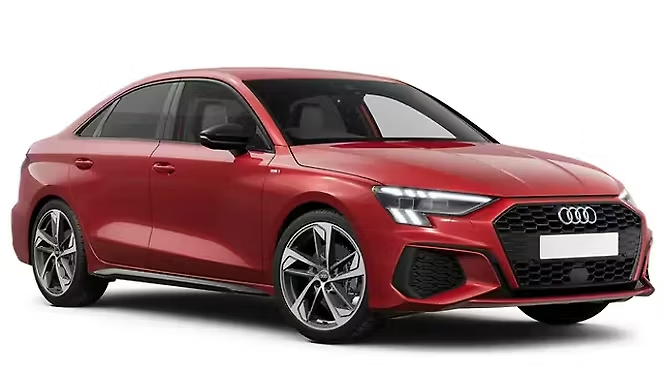
The Audi A3 is one of Audi’s most popular premium compact sedans in India — blending German engineering, contemporary features, and everyday usability in a package that appeals to urban buyers stepping up from mainstream brands. In 2026, as India and the European Union concluded a landmark Free Trade Agreement (FTA), many potential buyers are asking: Will the Audi A3 get cheaper? What is the current price, and what’s its real‑world value after the trade deal? Here’s an up‑to‑date look.
📌 Latest Audi A3 Price in India (2026)
- Projected Post-FTA Price: The Audi A3 is estimated to fall to a range of ₹32–₹36 lakh. Some optimistic estimates suggest a starting price as low as ₹25 lakh to directly challenge mid-range luxury SUVs.
- Pre-FTA/Last Recorded Price: Before its discontinuation, the A3 was priced around ₹35–₹46 lakh.
- Reduction Factor: The FTA is expected to slash import duties on European cars from the current 70%–110% down to as low as 10% over a 5–10 year transition period.
As of early 2026, Audi India has revised the A3’s prices, making it more competitive in its segment. The ex‑showroom prices are (approx):
| Variant | Ex‑Showroom Price (₹) |
|---|---|
| A3 35 TFSI Premium Plus | ₹28.99 lakh |
| A3 35 TFSI Technology | ₹30.99 lakh |
| A3 35 TDI Premium Plus | ₹29.99 lakh |
| A3 35 TDI Technology | ₹31.99 lakh |
These revisions came after a strategic price update by Audi — partly influenced by broader tax shifts like GST changes — but not directly due to the India–EU FTA yet.

📍 On‑Road Price (India)
On‑road pricing includes registration, insurance, road tax and other charges, which vary by city and state. Typically, you can expect:
- Delhi: ₹33.5 L to ₹38 L+
- Mumbai: ₹34 L to ₹39 L+
These figures are ballparks — exact rates depend on local taxes and insurance options.
⛽ Mileage & Running Costs
The Audi A3 delivers a blend of performance and economy:
- Petrol (1.4 TFSI): ARAI‑claimed ~19.2 km/l
- Diesel (2.0 TDI): ARAI‑claimed ~20.38 km/l
Real‑world driving:

- In city traffic, expect ~12–16 km/l for petrol, ~14–18 km/l for diesel.
- Highway cruising often exceeds the claimed figures.
Running costs naturally vary with fuel prices, maintenance and driving habits, but premium petrol could cost ~₹8–₹10/km and diesel ~₹4–₹6/km in most conditions.
🧾 Feature Highlights
The A3 compact sedan remains loaded for its price:
🔹 Exterior & Design
- Bold hexagonal grille and crisp LED lighting
- S‑Line styling option available on select trims
- Panoramic sunroof (on higher trims)
🔹 Interior & Comfort
- Premium cabin with soft‑touch materials
- Dual‑zone automatic climate control
- 10.1‑inch touchscreen infotainment
- Audi Virtual Cockpit digital driver display
🔹 Tech & Safety
- Wireless smartphone charging (Audi Phone Box)
- Multiple airbags and ABS
- LED ambient lighting
- ADAS features depend on variant and market pack
🔹 Performance
- Petrol: 1.4 L TFSI, ~148 hp
- Diesel: 2.0 L TDI, ~141 hp
- Smooth automatic gearboxes and punchy torque for urban and highway conditions.
📉 How the India–EU FTA Affects Car Prices
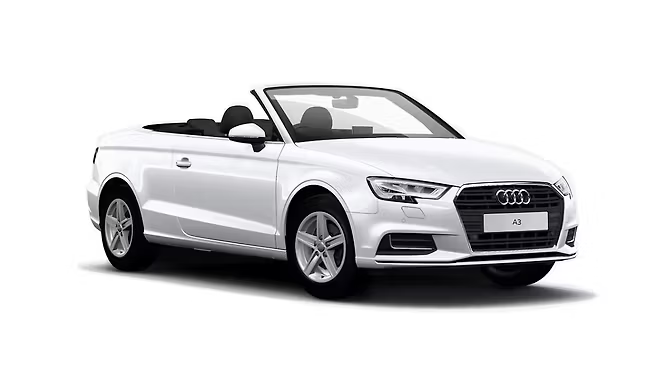
The India–EU FTA signed in early 2026 — widely dubbed the “mother of all deals” — has major implications for trade between India and Europe, including automobiles. However, its impact on the Audi A3’s price in India is less direct than many assume.

🇪🇺 What the FTA does (auto duties)
The deal will gradually reduce import tariffs on EU‑made cars:
- Current duties on European cars can be as high as 110%.
- Under the FTA, tariffs on certain imported cars will fall over time to as low as ~10%, under annual quotas of about 2.5 lakh units.
- Initial phase cuts bring tariffs down to ~30–40% before further reductions.
🚗 Why Audi A3 prices won’t drop much soon
- Local Assembly Matters
Most Audi A3 sedans sold in India are assembled locally in India from kits (CKD), not imported fully built. Local assembly already avoids hefty import tariffs, so FTA cuts don’t significantly change duty costs for these versions. - Phased Implementation
The new tariff regime phases in over years and applies first to fully imported units under quotas. Many European automakers plan long‑term supply and tariff strategies before price adjustments. - Currency Fluctuations
The Indian rupee weakened significantly against the euro in 2025, prompting carmakers to increase prices to protect margins. This trend may offset or erase tariff benefits even after the FTA comes into effect.
🔍 What Experts Say
Industry leaders have cautioned that a drop in sticker prices for European luxury cars — including Audi models — is unlikely soon. Most of the benefit may manifest in new model introductions, feature enhancements, or variant diversification, rather than outright lower retail prices.
📊 FTA Realistic Impact
- Luxury imports (CBUs): Could see meaningful price cuts over time as tariffs slide to ~10%.
- Local models (like A3): Minimal near‑term impact — price benefit may only come indirectly (e.g., cheaper parts, better tech transfer).
- Long term (5–10 years): Greater duty relief on parts could lower production costs marginally, which might slowly reflect in prices or feature value.
🔮 Final Take
The India–EU FTA is a historic trade deal that promises broad tariff reductions and deeper ties between India and European markets. Auto enthusiasts may look forward to more diverse European models at potentially better prices long term, but for the Audi A3 specifically, the new trade pact is unlikely to produce dramatic price cuts in the near term — especially for units assembled locally in India.

Leave a Reply