
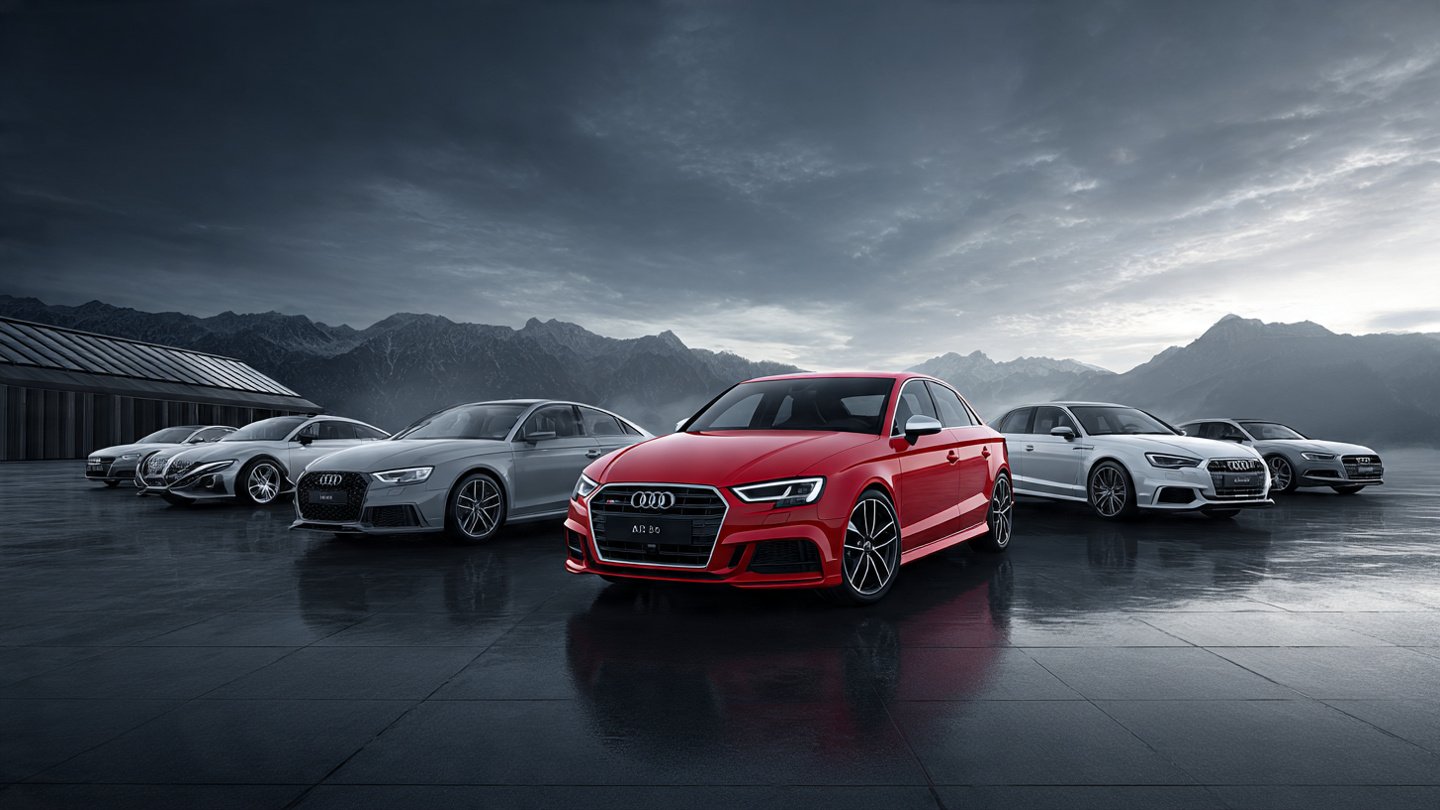

The India–European Union Free Trade Agreement (FTA) is expected to bring a historic change to India’s luxury car market. Import duties on European vehicles, which currently reach up to 110%, may gradually fall to 10–20%. For Audi, this could unlock major pricing advantages across sedans, SUVs, electric vehicles, and performance models. Although some Audi cars are assembled in India, they still rely heavily on imported engines, electronics, safety systems, and EV battery packs. Once duties on these components are reduced, Audi can significantly lower production costs and pass benefits to customers. Below is a detailed model-wise look at how Audi prices could change after the FTA.
Audi A3 Price After India–EU FTA
The Audi A3 is the brand’s entry-level luxury sedan in India and is especially popular among young professionals and first-time luxury buyers. Currently priced around ₹46 lakh, the A3 could fall to an estimated ₹32–36 lakh after the India–EU FTA. Even though it is locally assembled, the A3 uses imported engines, transmissions, infotainment modules, and safety electronics that attract heavy customs duty. With reduced tariffs on these key parts, Audi could lower its overall production cost. If priced closer to ₹33 lakh, the A3 would directly challenge the Mercedes A-Class and BMW 2 Series Gran Coupe, making luxury ownership far more accessible.
Audi A4 Price After India–EU FTA
The Audi A4 is one of the most trusted executive sedans in the Indian luxury segment and continues to attract corporate professionals and business owners. It is currently priced between ₹54–58 lakh, but post-FTA estimates suggest a possible drop to ₹38–45 lakh. The A4 still depends on imported powertrain components, digital displays, driver assistance systems, and interior electronics sourced from Europe. High duties on these parts inflate its final price. Once tariffs are reduced under the FTA, Audi may reprice the A4 aggressively. This could give it a strong edge over the BMW 3 Series and Mercedes C-Class.

Audi A6 Price After India–EU FTA
The Audi A6 is a premium executive sedan widely used by corporate leaders, luxury hotels, and premium fleet operators. Today, it is priced between ₹72–78 lakh in India. After the FTA, the estimated price range could drop to ₹50–60 lakh. The A6 relies on several imported technology modules, advanced infotainment systems, safety electronics, and drivetrain parts that attract high import taxes. Reduced duties on these components would lower Audi’s manufacturing and assembly costs. If Audi passes on these benefits, the A6 could become one of the best value luxury sedans in its segment and see increased demand across metro cities.
Audi A8 Price After India–EU FTA
The Audi A8 is the brand’s flagship luxury sedan and represents cutting-edge technology, comfort, and performance. It is currently priced at around ₹1.34 crore in India. As the A8 is largely imported, it carries a heavy tax burden. After the FTA, its estimated price could fall to ₹90 lakh–₹1.05 crore. The car uses highly advanced electronics, premium interiors, and European powertrain components that face steep duties. Lower tariffs would significantly reduce its landed cost. A major price drop would make the A8 far more attractive to ultra-luxury buyers who previously found it out of reach.
Audi Q2 Price After India–EU FTA
The Audi Q2 is the brand’s smallest and most affordable luxury SUV in India. It is currently priced between ₹35–38 lakh but could fall to ₹25–30 lakh after the FTA. Although compact, the Q2 features imported engines, infotainment systems, and safety technologies that attract high duties. With tariff reductions, Audi could significantly lower the SUV’s cost structure. A price near ₹25 lakh would make the Q2 the most affordable German luxury SUV in the country. This could attract buyers upgrading from premium mass-market SUVs and help Audi expand its footprint among younger and first-time luxury customers.


Audi Q3 Price After India–EU FTA
The Audi Q3 is a popular compact luxury SUV that appeals to urban professionals and small families. Currently priced between ₹45–55 lakh, it could drop to ₹32–40 lakh after the FTA. The Q3 relies on imported engines, electronic control units, digital cockpits, and safety systems that face heavy import duties. Lower tariffs on these components could allow Audi to revise its pricing strategy. A more competitive price would strengthen the Q3’s position against rivals like the BMW X1 and Mercedes GLA. This could lead to a sharp rise in demand, especially in metro and Tier-1 cities.
Audi Q5 Price After India–EU FTA
The Audi Q5 is one of the brand’s best-selling SUVs globally and is known for its comfort, technology, and performance. In India, it is currently priced between ₹66–73 lakh. After the FTA, the estimated price could fall to ₹48–55 lakh. Although locally assembled, the Q5 still uses several imported luxury components, powertrain parts, and safety systems that attract high customs duty. Reduced tariffs would lower production costs and allow Audi to offer better value. A lower price would help the Q5 compete more strongly with the BMW X3 and Mercedes GLC in the luxury SUV segment.
Audi Q7 Price After India–EU FTA
The Audi Q7 is a full-size luxury SUV known for its spacious cabin, premium features, and powerful engines. It is currently priced between ₹88–95 lakh in India. After the FTA, the estimated range could drop to ₹65–75 lakh. The Q7 uses several imported high-end components, including advanced safety technology, infotainment modules, and drivetrain systems, all of which attract high duties. With tariff reductions, Audi could significantly lower its costs. A revised price would make the Q7 far more appealing to luxury family buyers and strengthen Audi’s presence in the premium SUV category.

Audi Q8 Price After India–EU FTA
The Audi Q8 is a sporty flagship SUV that combines performance, luxury, and advanced technology. It is currently priced at around ₹1.12 crore in India. Being fully imported, it faces heavy customs duties. After the FTA, the Q8’s estimated price could drop to ₹80–90 lakh. Lower import taxes on its powertrain, digital systems, and premium interior components would reduce its landed cost significantly. This price correction would make the Q8 a more competitive alternative to the BMW X6 and Mercedes GLE Coupe, attracting buyers who desire a bold, luxury SUV with strong road presence.
Audi e-tron & Q8 e-tron Price After India–EU FTA
Audi’s electric lineup in India includes the e-tron and Q8 e-tron, currently priced between ₹1.02–1.25 crore. After the FTA, prices could fall to ₹70–95 lakh. These EVs rely heavily on imported battery packs, motors, power electronics, and software systems, which face very high import duties. Lower tariffs would reduce overall costs and make luxury EVs more accessible. Competitive pricing would encourage environmentally conscious buyers to adopt electric luxury vehicles and strengthen Audi’s position in India’s growing premium EV segment.
Audi RS Models Price After India–EU FTA
Audi’s RS performance models, including the RS3, RS5, and RS7, are fully imported and attract some of the highest duties in India. Currently priced between ₹1.20–2.10 crore, they could drop to ₹80 lakh–₹1.60 crore after the FTA. These cars use high-performance engines, advanced suspension systems, and premium interiors sourced from Europe. Reduced tariffs would significantly lower their prices. This would make Audi’s performance lineup more accessible to enthusiasts and boost demand in India’s ultra-luxury and sports car segment.

Audi TT & R8 Price After India–EU FTA
The Audi TT and R8 are iconic sports cars that are fully imported into India. The TT is currently priced around ₹90 lakh, while the R8 costs about ₹2.72 crore. After the FTA, the TT could fall to ₹60–70 lakh, and the R8 to ₹1.60–1.90 crore. These models face extremely high import taxes as completely built units. Duty reductions would dramatically lower their prices, making them more accessible to aspirational buyers and collectors. This could significantly increase interest in Audi’s sports car lineup in India.
